How We Helped a [AREA] Business Transform Their Space with Flowers
Posted on 13/11/2025

How We Helped a Business Transform Their Space with Flowers
Walk into a room with fresh flowers and you feel it before you understand it. The softer light bouncing off petals. The quiet hush of green. A subtle scent that tells your shoulders, relax, you're safe here. That was the brief for one London client -- a buzzing, slightly overstimulated office that needed calm, focus, and a touch of delight. In this long-form guide, we share exactly how we helped a business transform their space with flowers and how you can do the same, step by thoughtful step.
We'll cover the why, the benefits, and the practical how-tos. We'll talk budgets, maintenance, UK compliance, and what to avoid (because yes, lilies on a reception desk can be a gamble). You'll also find a real-world case study, a detailed checklist, and expert tips pulled from years of on-the-ground installations across offices, hotels, retail, and hospitality. If you're looking for a thorough, trustworthy and human guide to workplace florals and plant styling -- you're in the right place.

Table of Contents
- Why This Topic Matters
- Key Benefits
- Step-by-Step Guidance
- Expert Tips
- Common Mistakes to Avoid
- Case Study or Real-World Example
- Tools, Resources & Recommendations
- Law, Compliance or Industry Standards (UK-focused)
- Checklist
- Conclusion with CTA
- FAQ
Why This Topic Matters
Let's face it: most commercial spaces are designed for efficiency, not for joy. But people don't do their best work in grey boxes. They thrive in spaces where they can breathe, think and feel human. Flowers and foliage are the fastest, most flexible way to inject that life back in.
Research on biophilic design consistently shows improvements in mood, focus, and perceived wellbeing when natural elements are added to interior spaces. In the UK, we've seen businesses use floral design to align with wellbeing strategies, support ESG goals, and boost brand identity in a way that feels effortless. As one facilities manager told us, "I didn't change the furniture, the lighting, or the paint. I added flowers, and people stopped me in the corridor to say thanks."
In our experience, how we helped a business transform their space with flowers became the framework for many clients: start small, prioritise high-impact zones, then layer seasonal variety. It's not about fussy decor. It's about creating spaces that do more for people -- without a rebuild, without a headache.
Quick micro-moment: It was raining hard outside that day; you could hear the patter on the glass. We wheeled in buckets of ranunculus and eucalyptus for a quiet tech office. The room changed. People gathered just to watch us trim stems. Small thing, big shift.
Key Benefits
What's in it for your business? More than you'd think. Here are the core benefits we see, again and again, when workplaces embrace professional floral design.
- Immediate atmosphere upgrade: Flowers create a welcoming first impression at reception and client touchpoints. Clean, clear, calm. That's the goal.
- Employee wellbeing and productivity: Studies on biophilia suggest that exposure to natural elements can improve concentration and reduce perceived stress. To be fair, flowers won't write code for you -- but they can make writing it a lot nicer.
- Brand storytelling: Colour palettes, textures, and seasonal choices can mirror brand values. Imagine a sustainable brand showcasing wild meadow-style arrangements and British-grown flowers. On-message, beautifully.
- Photogenic spaces for social and hiring: Clients and candidates notice. A memorable lobby equals more screenshots, shares, and little moments of pride.
- Modular improvements without disruption: Flowers are flexible. You can start with a weekly reception piece, then add desk clusters, meeting room accents, or event styling when budgets allow.
- Scent and sensory quality: Gentle fragrance used carefully can lift mood. Tip: go subtle in close quarters; save fragrant varieties for airy spaces.
- Seasonal rhythm: Rolling displays connect people to time and place. Spring tulips, autumn dahlias. It's grounding. It's human.
A quick story: A client told us their Monday all-hands felt different when the fresh flowers went in on Sundays. People arrived a little earlier. Funny, but true.
Step-by-Step Guidance
Here's the exact process we use when showing how we helped a business transform their space with flowers, from first walk-through to steady-state maintenance. You can follow this framework with your in-house team or a professional florist.
1) Discovery and Site Walk
Start with a walk-through during normal operations. Notice traffic flow, light levels, and where eyes naturally land. Ask the questions that matter:
- What are the primary goals? (Welcome, wellbeing, brand, events, client wow?)
- What's the budget range and decision cadence? (Monthly, quarterly?)
- Are there allergies, scent sensitivities, or no-go plants?
- Who owns sign-off? Facilities, marketing, or leadership?
Pro tip: Take photos with natural light and artificial light. You'll see different colour tones, which can guide flower selection later.
2) Identify High-Impact Zones
Not every area needs flowers. Focus spend where people gather or where first impressions are made:
- Reception -- the handshake of your brand.
- Boardrooms and client suites -- keep it elegant, not distracting.
- Breakout spaces -- small clusters to soften acoustics and invite pause.
- Wayfinding points -- gentle cues that lead the eye.
Ever tried clearing a room and found yourself keeping everything? Flowers are the opposite. Choose fewer, better placements.
3) Define Style and Palette
Align to brand colours and culture. Minimalist tech might prefer monochrome whites and greens. A creative agency could embrace bold, seasonal palettes. Consider texture: glossy leaves, velvet petals, airy grasses. The aim is coherence, not uniformity.
We often build a mood board showing: stem list (primary, secondary, filler), colour references, vase shapes, height guidelines, and a few "no" examples (important!).
4) Choose the Right Mechanics
How your arrangement is built affects safety, sustainability, and longevity.
- Foam-free methods (like chicken wire, pin frogs, and reusable grids) reduce microplastic waste.
- Weighted vessels prevent tipping in busy areas.
- Hidden water reservoirs extend life and minimise spills.
Truth be told, a well-built arrangement looks better longer. It's craft, not just flowers.
5) Sourcing and Seasonality
We prioritise British-grown when possible for lower transport emissions and fresher stems. Winter may require imports for variety, but you can still honour the season with evergreen textures and warm hues. Ask suppliers about provenance. Transparency builds trust.
6) Installation Plan
Schedule installations for low-traffic windows (early morning tends to be best). Protect floors with mats. Use trolleys for heavy buckets. And confirm water access beforehand -- you'll thank yourself later.
- Prep stems offsite where possible.
- Pre-build mechanics and vessels.
- Bring spares for swaps; something always surprises you.
- Do a final sweep: wipe surfaces, adjust heights, remove trimmings.
A small moment: the security guard at one client insists on a quick photo of the weekly arrangement for his granddaughter. He's now our unofficial quality control. We love it.
7) Maintenance & Refresh Cycle
Fresh flowers typically last 5-7 days in commercial conditions. Plan weekly refreshes, with mid-week touch-ups for hero pieces. Add water daily, trim stems, and swap any tired stems promptly. For quieter spaces or budget-conscious months, consider long-lasting foliage and hardy blooms like chrysanthemums, alstroemeria, or anthuriums.
8) Measurement and Feedback
Track outcomes to prove value:
- Employee pulse surveys: ask about mood and space satisfaction.
- Client feedback: "How was your arrival experience?"
- Social shares: monitor mentions of reception or office environment.
- Facility incident logs: fewer spills, better traffic flows if layouts improved.
Iterate each quarter. Small tweaks add up. You'll see why.
Expert Tips
These are the little things that separate "nice flowers" from "wow, this space feels incredible."
- Mind the scent. In lift lobbies and meeting rooms, choose low-fragrance blooms. Save stronger scents (garden roses, stocks) for airy reception zones.
- Think height and sightlines. Keep table pieces below eye level for meetings; tall statement pieces can anchor reception without blocking faces.
- Layer texture, not just colour. Pair glossy camellia leaves with feathery asparagus fern, smooth ranunculus with airy waxflower. The interplay is what makes people pause.
- Seasonal edit. Don't fight the season. Lean into it: tulips in late winter, peonies in May/June, dahlias in autumn. It feels right, because it is.
- Choose vessels like furniture. Matte ceramics read calm and modern; cut glass feels classic; stoneware grounds the space. The container is half the story.
- Colour psychology matters. Blues and greens soothe; yellow accents energise; reds demand attention. Use sparingly for the mood you want.
- Pre-condition stems. Fresh cut, clean water, floral food as appropriate, and rest time before install. It's prep that buys you days.
- Safety first. Weight vessels, hide cables for any lighting, keep arrangements off fire routes. A beautiful space is a safe space.
One more tip: place a single bud vase in bathrooms. It's a quiet wink of hospitality that guests remember. Yeah, we've all been there -- noticing the tiny details.
Common Mistakes to Avoid
- Over-scenting small rooms. Even good smells become too much. Be kind to sensitive noses.
- Unstable vessels. High-traffic areas need weighted, low-centre-of-gravity containers. No wobbles, no worries.
- Ignoring cleaning and water management. Spills are preventable. Use discreet trays and protect porous surfaces.
- One-size-fits-all placements. What works in reception may be distracting in meeting rooms.
- Skipping maintenance. Day 1 flowers look different on Day 4. Plan for it.
- Allergen blind spots. Avoid heavy pollen or known triggers in enclosed spaces. Consider alternatives.
- Clashing palettes. Don't fight the interior design. Aim for harmony with existing finishes and art.
Ever walked into a boardroom and been greeted by a towering bouquet blocking your view? Exactly. Avoid that.
Case Study or Real-World Example
To bring this to life, here's how we helped a business transform their space with flowers -- a real project from our London portfolio.
Client Snapshot
Company: Cedar & Slate, a fintech scale-up in Southwark, London
Team Size: 150 staff across two floors
Brief: "Make the space warmer for clients and calmer for teams, without big renovations."
Timeframe: 12-week pilot, then ongoing
The Challenge
Their office had great bones: floor-to-ceiling windows and polished concrete floors. But it felt echoey and a tad stark. Monday energy was, well, low. The reception desk was sleek but cold; the boardroom felt clinical. People passed through, not pausing.
Our Approach
- Discovery: We did a morning walk-through to feel the natural light. It was grey and drizzly (classic London), and that helped us choose tones that would pop even on overcast days.
- High-impact zones: Reception, boardroom, and the large breakout space near the coffee machine (already a social hub).
- Palette and style: We proposed a seasonal palette anchored in brand colours (deep green, charcoal, soft cream) with occasional accent colours for contrast. Clean lines, architectural foliage, foam-free construction.
- Vessels: Heavy matte ceramics and smoked glass -- elegant, stable, and easy to wipe.
- Install rhythm: Weekly Monday morning install before 8 a.m., with a Thursday micro-refresh for hero pieces.
What We Installed
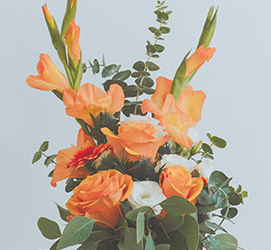
- Reception hero piece: A tall, asymmetrical arrangement mixing eucalyptus parvifolia, ranunculus, anthurium, and textural grasses. Soft movement, not static.
- Boardroom accents: Low bowls with white tulips and hellebores, below eye line to keep sightlines open.
- Breakout clusters: Small jars with seasonal stems (waxflower, alstroemeria, and grasses) spread across tables to subtly break up the hard acoustics.
- Bathrooms: Single stem bud vases, rotated weekly. Tiny but impactful.
Results
- Staff sentiment: An internal pulse survey after four weeks showed a 19% uplift in employees rating the office "welcoming" or "inspiring."
- Client feedback: Noted "warm reception" and "the nicest boardroom atmosphere we've seen this quarter."
- Behaviour change: People started holding quick huddles near the breakout clusters. The space invited conversation.
- Care and safety: Zero spill incidents over the 12-week pilot; foam-free installations reduced waste by approx. 35% versus traditional foam-based programs.
A micro moment: On week three, the CEO picked up a bud vase, smiled, and said, "Keep doing this." That was the ROI we needed.
Budget and Practicalities
We split the spend across one hero piece, two focal areas, and small accents. This allowed flexibility; if a month ran tight, we scaled back the small clusters without sacrificing the overall feel. Delivery was coordinated with facilities to avoid peak lift usage. Simple, smooth.
Tools, Resources & Recommendations
If you're serious about transforming your space with flowers, these tools and resources will help you do it right.
Floristry Tools
- Professional floristry snips and secateurs
- Floral tape, twine, and reusable zip ties
- Pin frogs, chicken wire, reusable grids (foam-free mechanics)
- Watering cans with long spouts, drip trays, absorbent cloths
- Weighted vessels with felt pads to protect surfaces
- PPE: cut-resistant gloves for heavy foliage, nitrile gloves for cleaning
Recommended Flower Types by Use
- Reception hero pieces: Delphinium, hydrangea, anthurium, amaranthus, fritillaria, protea. Pair with strong foliage like aspidistra or monstera.
- Boardroom low pieces: Tulips, ranunculus, hellebores, lisianthus, roses (low scent varieties), textural fillers.
- Long-lasting options: Alstroemeria, chrysanthemums, carnations (modern varieties look chic), anthuriums, eucalyptus.
- Low-scent choices: Orchids, anthuriums, many roses bred for form.
Supplier & Sourcing Tips
- Build relationships with reliable wholesalers or local growers.
- Ask for stem condition reports (age, handling, temperature).
- Prioritise British-grown in-season stems for freshness and lower emissions.
- Trial unfamiliar varieties before you roll out across the site.

Design References and Learning
- British Florist Association guidance for professional standards.
- Royal Horticultural Society advice for plant care and varieties.
- Biophilic design literature for workplace wellbeing insights.
It's okay to experiment. Start with one zone, learn, adjust. Then repeat.
Law, Compliance or Industry Standards (UK-focused)
Workplace flowers seem simple, but you're still responsible for safety, accessibility, and waste. Here's a UK-focused overview to keep you on the right side of best practice -- and the law.
Health & Safety
- Health and Safety at Work etc. Act 1974: Duty to protect employees and visitors. Ensure safe placement (no trip hazards), stable vessels, and safe working practices during installation.
- Workplace (Health, Safety and Welfare) Regulations 1992: Keep floors and traffic routes free from obstructions; avoid water spills; use trays and wipe immediately.
- Manual Handling Operations Regulations 1992: Train staff to move water buckets and heavy planters safely. Use trolleys.
- Control of Substances Hazardous to Health (COSHH): If you use flower food, cleaning agents, or sprays, maintain data sheets and safe handling.
- Working at Height Regulations 2005: For installing tall pieces or hanging decor, use appropriate ladders/steps and controls.
Fire Safety
- Regulatory Reform (Fire Safety) Order 2005: Keep arrangements clear of emergency signage and escape routes. Artificial foliage in public areas should be fire-retardant where relevant (check ratings like BS 5867 for textiles nearby).
Accessibility
- Equality Act 2010: Ensure arrangements do not obstruct mobility aids, tactile paving, or reception counter accessibility. Keep aisles wide and visual clutter minimal for neurodiversity considerations.
Waste & Sustainability
- Environmental Protection Act 1990 (Duty of Care): Segregate green waste; use licensed carriers for disposal; document waste transfers.
- Foam-free preference: Reduces microplastic pollution. If foam is ever used, dispose of responsibly; never down drains.
- Water stewardship: Use efficient watering and consider reusing grey water where compliant and safe.
Good compliance is invisible when it works. The goal is beauty without risk.
Checklist
Use this to run your project like a pro.
- Define objectives: mood, brand, wellbeing, client experience
- Set budget and cadence: weekly, fortnightly, monthly
- Map high-impact zones: reception, boardrooms, breakout
- Confirm policies: allergens, scent tolerance, security procedures
- Choose a palette and style guide; create a mood board
- Select vessels: stable, wipeable, on-brand
- Choose mechanics: foam-free where possible; plan water management
- Source stems: prioritise seasonal and British-grown
- Schedule install windows; coordinate with FM for access
- Plan maintenance: watering, mid-week touch-ups, waste removal
- Measure outcomes: surveys, feedback, social mentions
- Review quarterly; refine placements and palettes
Stick this on the wall. Then do the simple things well, every week.
Conclusion with CTA
When people ask us how we helped a business transform their space with flowers, we tell them the truth: we listened, we chose purposefully, and we installed with care. That's really it. Flowers won't solve every workplace problem, but they do shift how people feel in a space. They soften edges. They invite better conversations. They say, quietly, we thought about you.
If you're ready to lift your space without a full refurb, start small and go steady. One arrangement. One room. Let your team react. Then build from there. It's simpler than you think, and the impact is, honestly, bigger than it should be.
Get a free quote today and see how much you can save.
And whatever you choose, may your space feel a little more alive next Monday morning.
FAQ
How often should we replace flowers in a busy office?
Weekly is the gold standard for fresh arrangements in high-traffic areas. Plan a mid-week touch-up for hero pieces. In quieter zones, hardy stems and foliage can last 10-14 days with good care.
Are scented flowers a bad idea for workplaces?
Not inherently, but use them carefully. Opt for low-scent flowers in meeting rooms and lifts, and save gentle fragrances for open reception areas. Always consider known staff sensitivities.
What's the most cost-effective way to start?
Focus on a single high-impact location (usually reception) with a weekly or fortnightly rotation. Add smaller accents later once you see how the space responds.
Can we use artificial flowers instead of fresh?
Yes, especially for long-term installations or low-maintenance needs. Choose high-quality, fire-retardant options where required and dust regularly. Fresh flowers, however, offer unmatched scent and seasonal variety.
How do we manage allergies and pollen in the workplace?
Select low-pollen varieties (e.g., roses bred for low pollen, orchids, anthuriums). Remove stamens where appropriate, and avoid heavy pollinators like lilies in tight spaces. Communicate with staff and adapt quickly to feedback.
What's a reasonable budget for an office floral program?
It varies by size and ambition, but many offices invest in a weekly reception piece plus a few accents. Start with a pilot month, measure responses, and scale sensibly. Foam-free methods and seasonal stems keep costs efficient.
How do flowers support brand identity?
Through colour, form, and storytelling. Align arrangements with brand colours, culture, and values (sustainability, innovation, heritage). Consistent palettes and seasonal twists reinforce your brand without a single word.
Can flowers improve acoustics or lighting?
Indirectly. While flowers aren't acoustic panels, clusters and foliage can break up hard surfaces and soften perceived echo. They also interact beautifully with light, reducing glare and adding depth.
Do we need to worry about water spills or floor damage?
Yes -- but it's easy to manage. Use weighted vessels, discreet trays, and protective pads. Install during low-traffic windows and wipe surfaces after setup. A quick check each morning goes a long way.
Is there a sustainable way to run a floral program?
Absolutely. Prioritise British-grown stems in season, use foam-free mechanics, compost green waste, and choose reusable vessels. Track waste and experiment with long-lasting foliage to reduce turnover.
How do we handle multi-site installations across the UK?
Standardise your style guide and palette, then partner with reliable local florists or a lead florist who coordinates regionally. Schedule consistent install windows and create a simple, shared feedback loop.
What about events or VIP visits?
Keep a flexible add-on plan. With 72 hours' notice, you can upscale reception, add boardroom florals, and extend to hospitality trays. Pre-approved palettes and vessels keep last-minute requests stress-free.
Will flowers attract insects indoors?
In most office environments, no. Fresh stems are conditioned and changed before they deteriorate. Good housekeeping (no standing water left in trays) prevents issues.
We're in a highly secure building. Any special considerations?
Coordinate security badges for installers, agree delivery windows, and share vessel inventories. Use transparent bags for stem waste removal if requested by building management.
What's the fastest way to make a visible change this week?
Install one striking but clean-lined arrangement in reception with a coherent colour story and tidy mechanics. Add two or three small bud vases near waiting areas. Instant lift, minimal fuss.
In short, how we helped a business transform their space with flowers is the same way we help every client: with careful listening, skilled hands, and a little seasonal magic. Start small. Start today.
Latest Posts
How We Helped a [AREA] Business Transform Their Space with Flowers
Hydrangea Happiness: Tips for Year-Round Beauty
Stunning Flowers for a Memorable Birthday